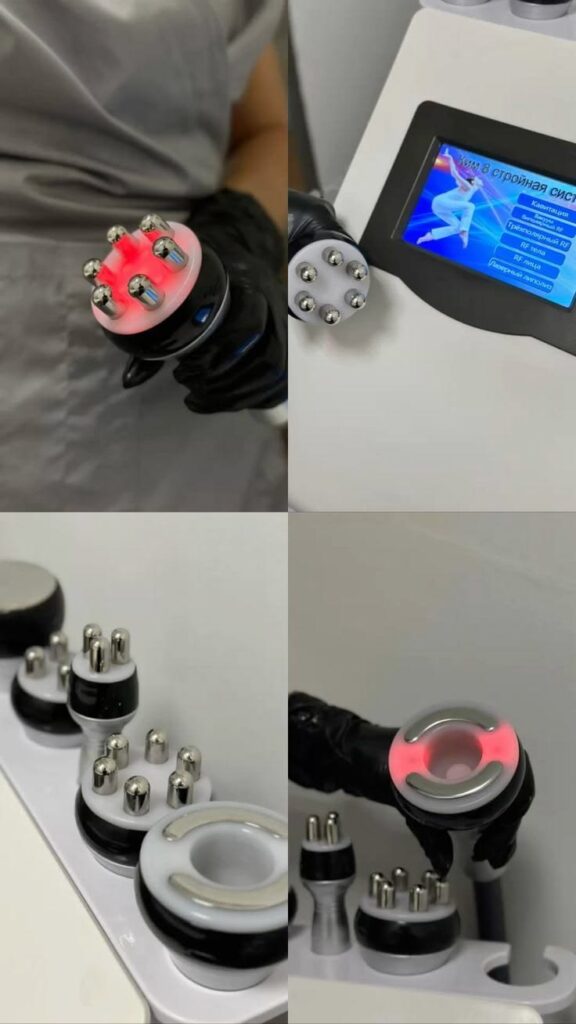
If you have been researching non-surgical body contouring, chances are you have come across two popular treatment options: ultrasound cavitation and fat freezing.
Both treatments are designed to target localised areas of unwanted fat without surgery, but they work in very different ways.
So, which one should you choose? Is cavitation better than fat freezing? Does one produce faster results? And which treatment is more suitable for your body contouring goals?
At Curve-U Slimming & Wellness Clinic, we believe that understanding your treatment options is the first step towards making informed decisions about your body.
Let’s explore the differences.
1. What Is Cavitation?
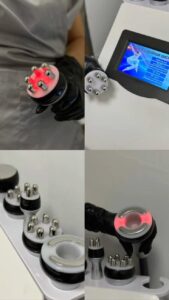
Ultrasound cavitation is a non-surgical body contouring treatment that uses sound-wave energy to target the fat layer beneath the skin.
During treatment, a specialised device is moved over the selected area using a suitable conductive gel. The ultrasound energy travels into the underlying tissue and can disrupt fat cells, depending on the technology and treatment settings used.
The body’s natural processes then help deal with the affected cellular material.
Cavitation is commonly used as part of body contouring programmes targeting areas such as:
- Abdomen and stomach
- Waist and love handles
- Thighs
- Hips
- Upper arms
- Other suitable areas of localised fat
What are the potential benefits of cavitation?
- Non-surgical treatment.
- No incisions are required.
- Targets selected areas rather than focusing on overall body weight.
- Can be incorporated into a broader body contouring programme.
- May require a course of treatments depending on the device and individual goals.
It is important to understand that results vary between individuals and that ultrasound devices differ in their technology, settings and effectiveness.
2. What Is Fat Freezing?
Fat freezing, medically known as cryolipolysis, is another non-surgical body contouring treatment.
Unlike cavitation, which uses ultrasound energy, fat freezing uses carefully controlled cooling temperatures to target fat cells.
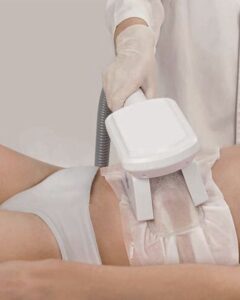
Fat cells are more sensitive to cold temperatures than many surrounding tissues. During treatment, a specialised applicator cools a targeted area of tissue.
The controlled cooling damages susceptible fat cells, which are gradually processed and removed through the body’s natural clearance mechanisms.
This process takes time, meaning results do not appear immediately.
Fat freezing is commonly used to target localised fat deposits in areas such as:
- Abdomen
- Flanks and love handles
- Back
- Thighs
- Other suitable treatment areas, depending on the device
What are the potential benefits of fat freezing?
- Non-surgical approach to localised fat reduction.
- Targets specific pockets of pinchable fat.
- No surgical incisions.
- Gradual changes over the weeks and months following treatment.
- May be suitable for individuals who struggle with stubborn fat deposits despite maintaining healthy lifestyle habits.
Fat freezing is not a weight-loss procedure. It is intended for targeted body contouring rather than treating general excess body weight.
3. Cavitation vs Fat Freezing: The Main Differences
Although both treatments fall under non-surgical body contouring, their underlying technologies are different.
| Feature | Cavitation | Fat Freezing |
|---|---|---|
| Technology | Ultrasound energy | Controlled cooling |
| Main target | Localised fat tissue | Localised fat tissue |
| Treatment sensation | Usually a warm or vibrating sensation, depending on the device | Cold, pulling or pressure sensations |
| Treatment approach | Ultrasound applicator moved over the area | Cooling applicator placed on the area |
| Results | Develop over time and vary by device | Develop gradually over several weeks to months |
| Downtime | Generally minimal | Generally minimal |
| Treatment plan | May require multiple sessions | May require one or more treatment cycles |
Neither treatment is universally better. The appropriate choice depends on the individual’s body, treatment area, health history, equipment used and desired outcome.
4. Which Treatment Produces Faster Results?
This is one of the most common questions clients ask.
The truth is that neither treatment offers guaranteed immediate results.
With cavitation, changes may develop over time, and multiple sessions may be recommended depending on the technology and individual response.
With fat freezing, the body gradually processes the affected fat cells. According to the US Food and Drug Administration, this process generally takes approximately two to three months.
It is important to allow sufficient time for the body to respond before evaluating the outcome.
A good treatment programme should focus on realistic expectations rather than promises of instant transformation.
5. Can Cavitation and Fat Freezing Be Combined?
Different body contouring technologies can sometimes form part of a broader treatment programme.
However, combining treatments does not automatically mean better results.
The suitability of combining ultrasound-based treatments and cryolipolysis depends on the individual, the devices being used, treatment areas and appropriate recovery intervals.
Treatments should never simply be stacked together without professional assessment and consideration of the manufacturer’s instructions.
A personalised treatment plan is always preferable to choosing treatments based solely on popularity.
6. Are These Treatments Suitable for Everyone?
No. Non-surgical does not mean risk-free.
Both ultrasound-based treatments and fat freezing have potential side effects and contraindications.
Cavitation and therapeutic ultrasound may cause discomfort, redness, swelling or, in some circumstances, burns. Certain devices may not be suitable for individuals with active implanted electronic devices, metal beneath the skin in the treatment area or compromised skin.
Fat freezing may cause temporary redness, swelling, bruising, discomfort and numbness. More serious complications can occur, including paradoxical adipose hyperplasia, a rare condition in which the treated fat tissue becomes larger rather than smaller.
Fat freezing is also unsuitable for people with certain cold-related conditions, including Raynaud’s disease, cold urticaria and cryoglobulinaemia.
Pregnancy, breastfeeding, existing medical conditions and other individual factors must also be considered when assessing suitability.
Always disclose your medical history and medications before undergoing treatment. A qualified healthcare professional should assess any relevant medical concerns.
7. Is Body Contouring the Same as Weight Loss?
Absolutely not, and this distinction is important.
Body contouring treatments are designed to address selected aesthetic concerns, such as localised fat deposits. They are not substitutes for weight management, healthy eating, physical activity or medical weight-loss treatment.
They are also not alternatives to surgical procedures when significant fat removal or excess skin removal is required.
A person can lose weight without achieving the particular body shape they want, just as someone can be relatively weight-stable while having specific areas they would like to address.
The key is understanding what each treatment can realistically achieve.
8. How Do You Choose the Right Treatment?
Choosing between cavitation and fat freezing should never be based on price alone.
Consider the following:
Your treatment goals: Are you interested in targeting a specific area of localised fat or addressing a broader body contouring concern?
Your health history: Certain medical conditions and medications may affect which treatments are appropriate.
The technology: Different devices have different capabilities, treatment protocols and evidence supporting their intended uses.
Your expectations: Understand that non-surgical body contouring has limitations and does not guarantee a particular result.
Professional assessment: A proper consultation helps determine whether a treatment is appropriate or whether another option would be more suitable.
9. Discover Body Contouring at Curve-U Slimming & Wellness Clinic
At Curve-U Slimming & Wellness Clinic, we offer a range of slimming, body contouring and wellness treatments designed to address different aesthetic goals.
Our services include:
- Cavitation & Radio Frequency
- Fat Freezing
- Laser Lipolysis
- EMS Faradic
- Bipolar Vacuum RF
- Cellulite Cupping
- Micro Sculpting
- Body Shaping
- Ozone Sauna Therapy
- Wood Therapy
Our approach focuses on helping clients understand their options and explore treatments that are appropriate for their individual needs.
Whether you are researching cavitation, fat freezing or other body contouring options, understanding the technology and having realistic expectations are essential.
Final Thoughts: Cavitation or Fat Freezing?
Both cavitation and fat freezing offer non-surgical approaches to targeted body contouring, but they work differently and have different considerations.
Cavitation uses ultrasound energy, while fat freezing uses controlled cooling to target fat cells.
There is no single treatment that is right for everyone. The best starting point is understanding your goals, considering your health and choosing an appropriate treatment following a professional assessment.
Ready to explore your body contouring options?
Contact Curve-U Slimming & Wellness Clinic to find out more about our treatments and arrange a consultation.
Curve-U Slimming & Wellness Clinic
1 Fleur Street, Wilgehof, Bloemfontein
Telephone: 074 640 0964
Email: info@curve-u.co.za
Website: www.curve-u.co.za
Industry Leaders Since 2012.