
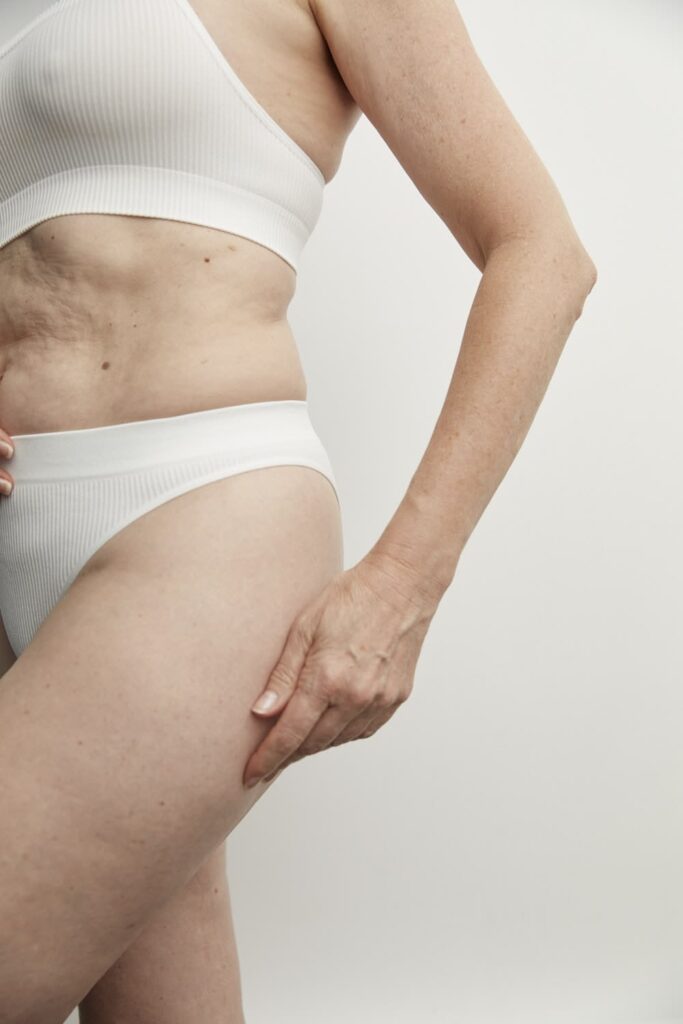
When most people think about fat, they picture the fat they can pinch around their stomach, thighs, or arms. However, the body actually contains several different types of fat, each with its own purpose and impact on health.
Understanding the difference between visceral fat, subcutaneous fat, and brown fat can help you better understand your body and your weight loss journey.
Subcutaneous Fat: The Fat You Can Pinch
Subcutaneous fat is the fat located directly beneath your skin. This is the fat you can grab with your fingers around your abdomen, hips, thighs, buttocks, and arms.
Subcutaneous fat serves several important functions:
- Stores energy
- Provides insulation
- Protects organs from injury
- Helps regulate body temperature
While excess subcutaneous fat may affect body shape and confidence, it is generally less harmful than visceral fat.
Many body contouring treatments, including cavitation and radio frequency, are designed to target areas where subcutaneous fat accumulates.
Visceral Fat: The Hidden Fat Around Your Organs
Visceral fat is stored deep inside the abdomen, surrounding organs such as the liver, pancreas, and intestines.
Unlike subcutaneous fat, visceral fat cannot be pinched or seen directly. A person may appear relatively slim but still have excessive visceral fat.
High levels of visceral fat are associated with:
- Type 2 diabetes
- Heart disease
- High blood pressure
- High cholesterol
- Metabolic syndrome
Visceral fat is considered the most harmful type of excess fat because it actively releases inflammatory substances and hormones that can negatively affect health.
A larger waist circumference is often a sign of increased visceral fat.
Brown Fat: The Fat That Burns Calories
Brown fat is very different from both visceral and subcutaneous fat.
Instead of storing energy, brown fat actually burns energy to produce heat. This process is known as thermogenesis.
Brown fat contains a large number of mitochondria, which gives it its darker colour and allows it to generate heat by burning calories.
Brown fat is found in small amounts in adults, typically around:
- The neck
- Collarbone area
- Upper back
- Along the spine
Researchers are particularly interested in brown fat because it may help regulate metabolism and energy expenditure.
Unlike subcutaneous fat, brown fat is generally considered beneficial.
What About the Fat Around Muscles?
Many people refer to brown fat as being “under the muscles,” but this is not entirely accurate.
Brown fat can be located between muscles and around deeper tissues in some areas of the body, particularly near the neck and upper back. However, it is not the same as muscle tissue and does not form a layer underneath all muscles.
There is also another type called beige fat, which behaves somewhat like brown fat and can develop within white fat tissue under certain conditions.
Which Type of Fat Should You Be Most Concerned About?
From a health perspective, excess visceral fat is usually the greatest concern because of its strong links to chronic disease.
From an appearance and body contouring perspective, subcutaneous fat is often what people notice most and what contributes to stubborn areas around the abdomen, thighs, hips, and arms.
The Bottom Line
Not all fat is the same.
- Subcutaneous fat is the fat you can see and pinch beneath the skin.
- Visceral fat is the hidden fat surrounding internal organs and poses the greatest health risk.
- Brown fat is a special type of fat that burns calories to generate heat and may support a healthy metabolism.
Understanding these differences can help you focus on both your health and your body composition goals, rather than simply watching the number on the scale.