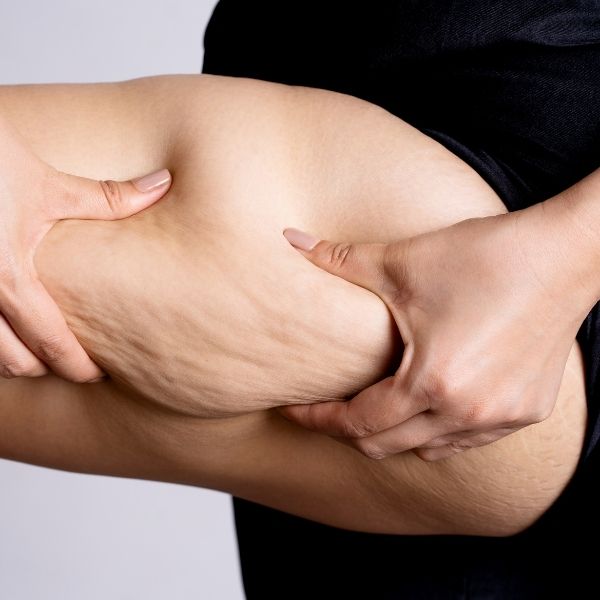
Cellulite is one of the most common skin concerns among women, affecting more than 85–90% of all females at some point in their lives. It doesn’t matter if you’re slim, curvy, fit, or anywhere in between — cellulite can appear on any body. And while it’s completely normal and harmless, many women want to understand why it happens and what can be done about it.
1. The Structure of Women’s Fat & Connective Tissue
The number one reason women get cellulite more than men comes down to anatomy.
Women’s connective tissue fibres are vertical, creating pockets where fat can push through the skin, forming dimpling. Men’s fibres are cross‑hatched, keeping fat packed tightly. Even slim women can have cellulite because it’s structural — not just fat-related.
2. Hormones Play a Huge Role
Estrogen is one of the biggest contributors to cellulite formation.
Estrogen reduces collagen, increases fat storage in the hips and thighs, and slows circulation. Other hormones like insulin, cortisol, and thyroid hormones also affect fat storage, collagen strength, and water retention. This is why cellulite often worsens during puberty, pregnancy, PMS, or menopause.
3. Reduced Circulation & Lymphatic Drainage
Poor circulation means less oxygen, slower waste removal, and more fluid retention. This causes the fat layer to swell and push harder against the skin. Treatments that improve circulation — like RF, Solac, or Ozone Sauna — noticeably reduce cellulite.
4. Collagen Breakdown
Collagen is the supportive framework beneath the skin. When collagen weakens due to age, hormones, sun exposure, smoking, stress, or poor diet, the skin becomes thinner and less firm, making cellulite more visible.
5. Enlarged Fat Cells
Cellulite is caused by fat pushing against weak connective tissue. When fat cells enlarge — due to diet, stress, hormones, or sedentary habits — they create more pressure, deepening the dimples.
6. Genetics & Body Type
Cellulite can be inherited. Genetics influence connective tissue structure, fat distribution, collagen levels, and fluid retention. If your mother or grandmother had cellulite, you are naturally more prone to it.
7. Lifestyle Factors That Make Cellulite Worse
Certain habits worsen the appearance of cellulite:
– Lack of exercise
– Dehydration
– High salt or sugar diet
– Smoking
– Sitting for long periods
– Stress and high cortisol levels
8. Skin Thickness Matters
Women with naturally thinner skin show cellulite more easily. Even very slim women can have visible cellulite because their skin has less thickness to mask the connective tissue.
Conclusion
Cellulite is not a sign of poor health. It is a structural, hormonal, and genetic phenomenon. However, its visibility increases due to weakened collagen, poor circulation, fluid retention, enlarged fat cells, and changes in skin elasticity.
Since cellulite has multiple causes, the best improvements come from treatments that address fat, skin firmness, circulation, and lymphatic drainage — which is why multi-action therapies such as Cavitation, RF Skin Tightening, Solac, Bipolar Vacuum RF, Ozone Sauna, EMS, and Micro Dry Brushing are highly effective.